


Course Content
Seven focused, hands-on modules
Training is structured into concise, engaging modules that build knowledge step by step:
01 Introduction to PAT Testing and Electrical Equipment
The course opens by establishing exactly what Portable Appliance Testing is, why it exists and how it sits within a broader programme of electrical safety management. We introduce the core terminology used throughout the industry, ensuring nothing in later modules comes as a surprise.
You'll also be guided through the different categories of electrical equipment you're likely to encounter — portable, movable, hand-held, stationary, fixed and IT equipment — along with the equipment classes (Class I, Class II and Class III) that define how each appliance is protected against electric shock. Grasping these classifications early is essential, as they dictate which tests are appropriate for any given appliance.
02 Electrical Safety, Electrical Dangers and Relevant Legislation
Before picking up a PAT tester, you need to understand the hazards you're managing. This module covers the mechanisms by which electricity causes injury — electric shock, burns and the risk of fire caused by faulty or damaged equipment — and the conditions that allow those hazards to develop.
The module then sets out the full legal framework underpinning portable appliance testing in the UK. You'll work through the Health and Safety at Work etc. Act 1974, the Electricity at Work Regulations 1989, the Provision and Use of Work Equipment Regulations 1998 (PUWER) and associated duties. We also address the common misconception that a specific law mandates PAT testing: whilst no such law exists, duty-holders are legally required to maintain electrical equipment in a safe condition, and a structured programme of inspection and testing is the established way to evidence that obligation. You'll finish this module clear on who holds responsibility and what "reasonably practicable" means in real terms.
03 Visual Inspections and Equipment Construction
The visual inspection is the cornerstone of the PAT process — it uncovers the majority of defects before a single test lead is connected. This module teaches you how to conduct a thorough, formal visual inspection and how to spot the signs of damage, wear, overheating or misuse that mean an appliance should be withdrawn from service.
We also look inside appliances, covering correct plug wiring to BS 1363, appropriate fuse selection, cable and flex condition, strain-relief integrity, and the soundness of casings and connections. You'll learn how an appliance's construction relates to its equipment class, and you'll understand the distinction between the routine user checks that all staff should perform and the formal visual inspection carried out by a trained, competent person.
04 Practical Instruction Using PAT Testing Equipment
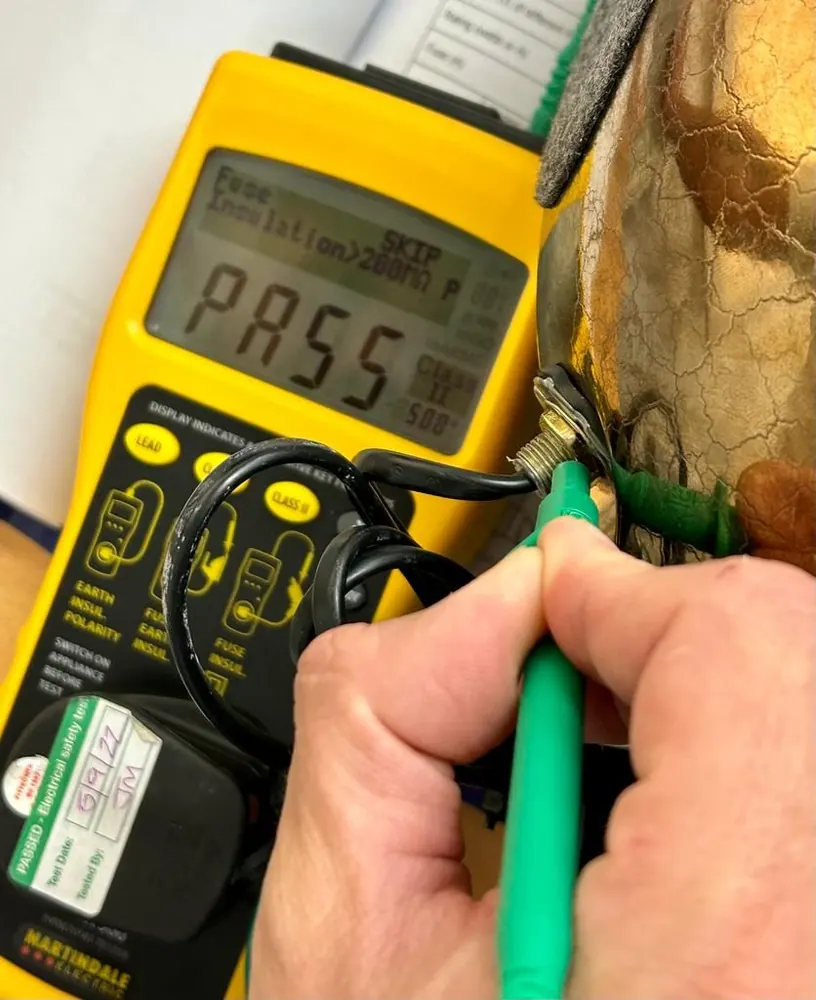
This is where the course truly becomes practical. Working with professional-grade PAT testing instruments in the learning zone, you'll learn to set up and operate testing equipment safely, accurately and with confidence. We cover the full spectrum of testers encountered in the field, from simple pass/fail units through to advanced downloadable instruments capable of storing and transferring large volumes of test data.
You'll practise connecting appliances correctly, appreciate the importance of using calibrated equipment, and develop the kind of muscle memory that only comes from repeated, supervised practice. By the close of this module, operating a PAT tester will feel entirely familiar.
05 Inspection and Testing Procedures
This module walks through the formal test sequence and demonstrates how to apply it to a range of common appliances. You'll cover all the core electrical tests — including earth continuity testing, insulation resistance testing, lead and polarity checks, and functional checks — understanding the purpose behind each one and what a valid result tells you about an appliance's condition.
A particular focus is placed on how the correct test sequence differs between Class I and Class II equipment, so you always run the right tests in the right order. Safe working practice is emphasised throughout, ensuring every test you carry out is technically sound and conducted without risk.
06 Interpreting Test Results and Record Keeping
Recording a result is only meaningful if you can interpret it properly. This module shows you how to read test outcomes against published acceptable limits, make a clear pass or fail decision, and take appropriate action when an appliance fails. You'll learn correct labelling procedures for tested equipment and how to maintain records that are accurate, organised and defensible.
We also address the question of retest intervals. The current edition of the IET Code of Practice moved away from prescriptive fixed-frequency tables in favour of a risk-based approach, and this module shows you how to set inspection and testing frequencies based on equipment type, operating environment, frequency of use and the likely user. Robust record keeping and a well-maintained asset register are presented as the foundation of demonstrating ongoing compliance and due diligence.
07 Legal Requirements, Non-Statutory Requirements and the IET Code
The final module ties your new skills firmly to their regulatory context. You'll understand the distinction between statutory requirements — the law you must follow — and non-statutory guidance, which represents recognised best practice and provides the practical route to compliance. Both, you'll see, are essential reference points for any competent PAT tester.
Central to this module is the IET Code of Practice for In-Service Inspection and Testing of Electrical Equipment, now in its 5th edition. We examine what the Code says, how it supports the relevant legislation and how to apply it as your primary technical reference. You'll complete the course with a clear understanding of what competence means in this field, how to demonstrate due diligence, and how to conduct portable appliance testing to a professional and fully defensible standard.
Learners dedicate a substantial portion of the day to hands-on practice in the learning zone, working with real PAT testing instruments under expert guidance.